- Commercial Greenhouse
- Film Greenhouse
- PC Greenhouse
- Glass Greenhouse
- Tunnel Greenhouse
- Scientific Research Greenhouse
- Vegetable Greenhouse
- Flower Greenhouse
- Multi-span Greenhouse
- Sawtooth Greenhouse
- Greenhouse Equipments
- Greenhouse Accessories
- Hot Dip Galvanized Pipe
- Irrigation System
- Hydroponics System
- Planting Tools
- Planting technology
Tel: +86 191 5068 3942
Fax:
Mobile: +86 191 5068 3942
Contact: Alina
E-mail: sales@cngreenhouses.com
SKYPE:


Film Greenhouse for Tomatoes: Headroom, Humidity, Heat
Tomato demands on a film greenhouse: headroom for training wire, ventilation against grey mould, the day and night swing, and winter insulation.
.
TEL:+86 191 5068 3942
- Features


Tomato is the crop a film greenhouse is most often asked to carry, and the crop that complains loudest when the house is wrong. Three things decide the season under film: the height the plants are trained into, the moisture in the air around the leaves, and the gap between day and night temperature.
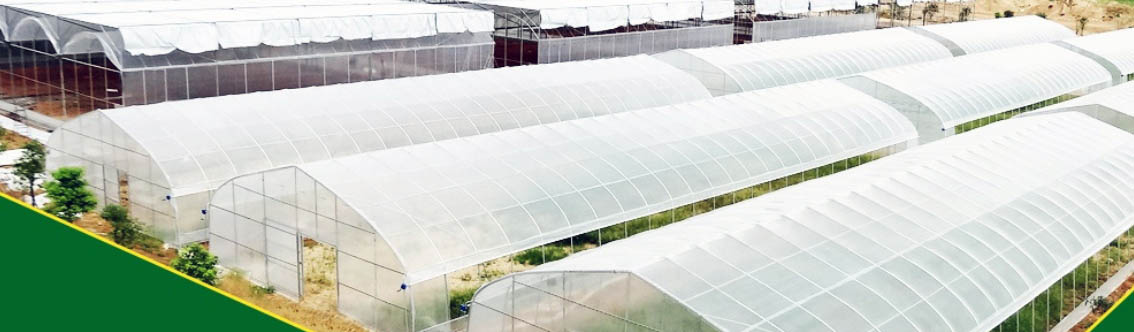
This house is a multi-span film greenhouse, also called an agricultural plastic poly film greenhouse: aluminum and hot dip galvanized steel pipe under an arch roof, anti-PEP film on a grooved channel held by aluminum clips, single or double layer. For tomatoes its job is to give room above, keep the air moving and soften the night.

What a Tomato Crop Asks of the House
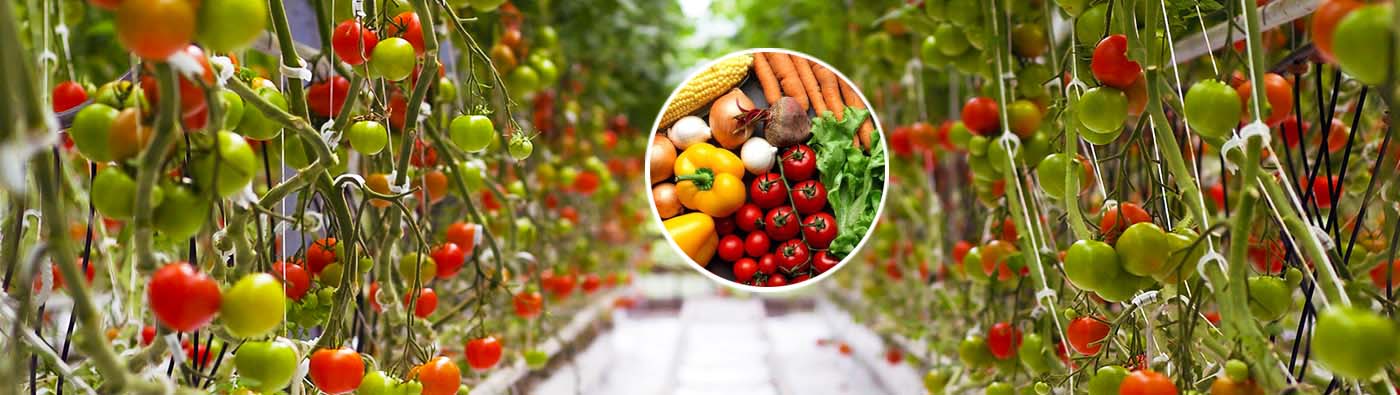
A tomato is trained rather than left to sprawl. The stem is wound up a string and the fruit is carried in trusses at successive heights, so the crop is a tall, narrow column that keeps climbing to the end of the season. Vertical space is therefore the first demand, not floor area. The second is air: tomato leaves give off water all day and a closed film house holds it far better than open ground, so a house that cannot exchange air becomes a house with wet leaves. The third is the night, because how much sugar stays in the fruit is settled between sunset and sunrise.
Headroom: Training Height and Shoulder Height
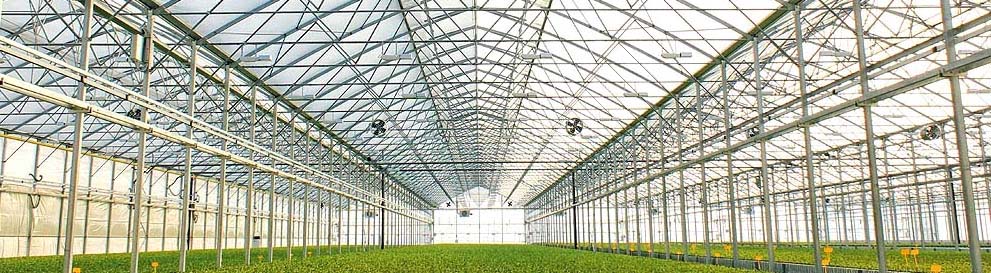
The useful height of a tomato house is where the plants are worked, not the highest pipe. In a multi-span house the gutter and side wall set the shoulder height along the outside and the arch rises from there to the ridge. Training wire, truss supports and the upper runs of a heating or irrigation line all have to fit above the crop and still leave the cover clear of the top leaves.
On this model total structure height is 4.3 to 6.5 metres, with bays at spans of 6.4, 8, 9.6 or 10 metres. A wider span gives a longer clear run of gutter between columns, which decides how many rows stand under one bay and how much crop is reached from one path. How high the crop itself is trained, and whether it is layered over late in the season, follows the cultivar and the grower's system rather than the house.
What carries that load is a hot dip galvanized steel pipe frame, chosen so the structure does not rust, with the cover on a grooved channel that keeps the film tight against wind and weather. How long the galvanizing lasts is assessed under ISO 9223 and BS EN ISO 14713-1 against the corrosivity class of the site, class C2 in clean country air through C3 urban and C4 industrial to C5 coastal, with coating thickness or zinc weight per unit area as the figure to check.
Ventilation and Humidity: Keeping Grey Mould Out
Grey mould is the disease a tomato grower watches through a film house, and it starts where leaves stay wet. The spores need a film of water standing on the leaf long enough to establish, and a closed house holds the water the crop releases. The answer is air exchange, so ventilation is chosen with the crop in mind rather than added afterwards.
Ventilation here is manual or electric and is quoted as an add-on line. In film houses generally the openings run high along the ridge to let warm, wet air out at the top and low along the side walls to draw drier air in at crop level; more of it is set out with the natural ventilation we fit to commercial houses.
Two habits go with the hardware. Water goes to the root zone instead of over the leaves, which is what drip irrigation is for, and it finishes early enough for the crop to dry before the house closes for the night. Where heating is fitted it holds the leaf surface clear of the dew point rather than warming the whole volume, because condensation on the leaf is what starts the disease.

Day and Night Swing, Fruit Quality and Winter Insulation
Tomato quality is built across the twenty-four hours. By day the plant puts sugar into the fruit; at night it uses part of it up again in respiration at a rate that follows air temperature, so a house running cooler after dark leaves more sugar in the fruit. That gap is also the weak point of a film house, because film is thin and gives up heat quickly once the sun is off it.
The covering is where the house answers. Film of 0.15 mm or 0.12 mm, standard clear at 6 mil, runs as a single or a double layer, and two layers with air held between the sheets is the insulation a film house has. The structure is quoted as preventing heat loss and cold air intrusion, with good insulation properties and low energy consumption, suitable for all climate conditions. Heating is an add-on line where winter asks for more, and shading and cooling where summer light and heat are the pressure; shading is covered by the shade net used over summer crops.
Figures, Add-Ons and Links for This Model
Type: film greenhouse, multi-span, frame of aluminum and hot dip galvanized steel pipe under an arch roof, cover of standard clear polyethylene film on a grooved channel held with aluminum clips. Working size 64 m by 40 m, area 2,560 square metres, middle scale, materials plastic and mesh, design wind load 0.35 kN/m2, ventilation manual or electric, 20-year structural warranty. Crops listed for the house are vegetable, fruit, flower and seed nursery. It is packed in three groups: metal structures, covering system and install accessories. Custom-cut lengths are available on many film styles, so the covering can be ordered in the exact amount needed. The houses are exported globally and built in the company's own factory for above 35 years, with an engineer sent abroad to guide installation on request.
The wider range it belongs to is the film greenhouse range we build. Guidance on covered structures comes from the National Greenhouse Manufacturers Association, and reporting on commercial protected crops appears in HortWeek. For a tomato house on your own site, call +86 191 5068 3942 or write to sales@cngreenhouses.com with the ground area and the crop.
Frequently Asked Questions
Q: How tall does a film greenhouse need to be for tomatoes?
It follows how high the crop is trained, not a fixed figure. The useful height is the shoulder along the gutter and side wall plus the arch rising to the ridge. This model runs 4.3 to 6.5 metres high, with bays at 6.4, 8, 9.6 or 10 metre spans.
It follows how high the crop is trained, not a fixed figure. The useful height is the shoulder along the gutter and side wall plus the arch rising to the ridge. This model runs 4.3 to 6.5 metres high, with bays at 6.4, 8, 9.6 or 10 metre spans.
Q: Why is ventilation the first thing to get right in a tomato film house?
Because grey mould establishes on leaves that stay wet, and a closed film house holds the moisture the crop releases. Air has to be exchanged before a film of water can stand on the leaf. Ventilation is manual or electric here and pairs with root zone watering that stops early enough for the crop to dry before night.
Because grey mould establishes on leaves that stay wet, and a closed film house holds the moisture the crop releases. Air has to be exchanged before a film of water can stand on the leaf. Ventilation is manual or electric here and pairs with root zone watering that stops early enough for the crop to dry before night.
Q: Does a wide day and night temperature difference improve tomato fruit?
The plant makes sugar in the fruit by day and uses part of it up in respiration at night, at a rate that follows air temperature, so a cooler night leaves more sugar in the fruit. The night temperature is the grower's decision, not the house's. A single film layer loses heat quickly, while a double layer with air between the sheets holds it longer.
The plant makes sugar in the fruit by day and uses part of it up in respiration at night, at a rate that follows air temperature, so a cooler night leaves more sugar in the fruit. The night temperature is the grower's decision, not the house's. A single film layer loses heat quickly, while a double layer with air between the sheets holds it longer.
Q: Single layer or double layer film for a winter tomato crop?
A double layer with air trapped between the sheets is the insulation a film house has, so it is the heavier option for winter. Either way the film is standard clear at 6 mil, 0.15 mm or 0.12 mm, and the structure prevents heat loss and cold air intrusion.
A double layer with air trapped between the sheets is the insulation a film house has, so it is the heavier option for winter. Either way the film is standard clear at 6 mil, 0.15 mm or 0.12 mm, and the structure prevents heat loss and cold air intrusion.
Q: What frame, span and cover figures apply to this house?
Frame of aluminum and hot dip galvanized steel pipe, arch roof, 4.3 to 6.5 metres high, spans of 6.4, 8, 9.6 or 10 metres. Cover of standard clear film at 6 mil, 0.15 mm or 0.12 mm, single or double layer.
Frame of aluminum and hot dip galvanized steel pipe, arch roof, 4.3 to 6.5 metres high, spans of 6.4, 8, 9.6 or 10 metres. Cover of standard clear film at 6 mil, 0.15 mm or 0.12 mm, single or double layer.
Q: Can cooling, irrigation, shading or heating be added to the house?
Yes, each quoted as its own line: cooling and heating, irrigation, ventilation, fertilization, shading and benches are available on request. They add to the house rather than change its frame, so a tomato crop can be given the humidity control or winter heat it needs.
Yes, each quoted as its own line: cooling and heating, irrigation, ventilation, fertilization, shading and benches are available on request. They add to the house rather than change its frame, so a tomato crop can be given the humidity control or winter heat it needs.
Note: If you're interested in the product, please submit your requirements and contacts and then we will contact you in two days. We promise that all your informations won't be leaked to anyone.
 Deutsch
 Español
 Français
 Italiano
 Português
 日本の
 한국어
 العربية
 български
 hrvatski
 česky
 Dansk
 Nederlands
 suomi
 Ελληνικά
 हिन्दी
 norsk
 Polski
 Română
 русский
 Svenska